Sygale LomasDavid Lyng Real Estate
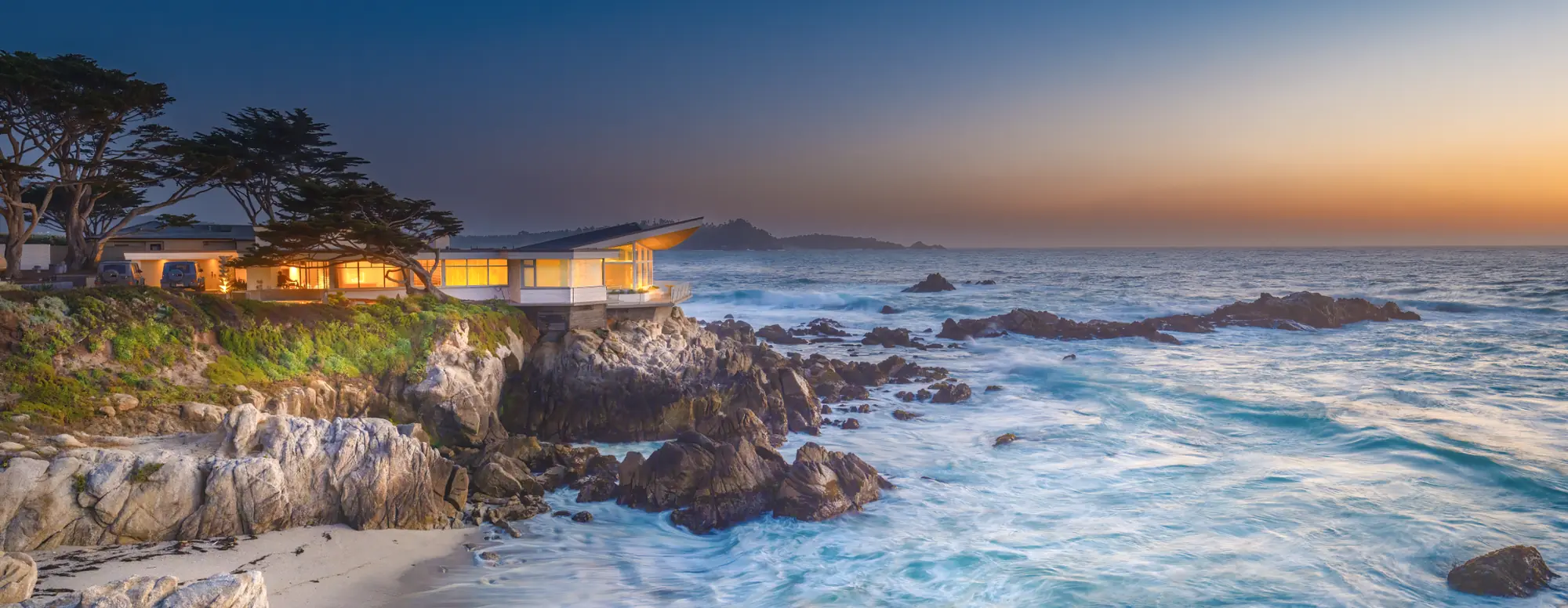
Oceanfront home glowing at dusk above the rocks at Carmel Point, Carmel-by-the-Sea

Areas Served

Carmel-by-the-Sea

Butterfly House, Carmel Point

The village

One square mile that makes its own rules.

Carmel-by-the-Sea is a one-square-mile coastal village on California's Monterey Peninsula, known for its cottages, its cypress, its white-sand beach, and a set of local conventions that exist almost nowhere else.

Buying here is not quite like buying anywhere else, and most of the surprises are not about price. They are about how the village works — how properties are identified, what you may and may not do to a tree, which authority actually governs the lot you are standing on, and whether there is water available for what you are planning.

None of it is a reason not to buy here. All of it is a reason to have someone who knows the village before you write an offer.

Before you buy

Four things that surprise almost everyone

01

There are no street addresses

Properties in the village are described by their position relative to cross-streets rather than by a number, and there is no home mail delivery — residents collect mail from the post office. Many houses have names. It is genuinely charming, and it quietly affects deliveries, navigation, insurance paperwork and how listings are written.

02

The trees have standing

Carmel protects its urban forest seriously, and removing or significantly altering a tree generally requires the city's approval. If your plans involve an addition, a new driveway, or opening up a view, understand what is on the lot and what approval involves before you assume any of it is possible.

03

Water is a real constraint

Supply on the Peninsula is limited, and water credits or meter capacity can determine whether a property can be expanded, remodelled in certain ways, or built on at all. This is the item out-of-area buyers least expect and most regret skipping. Treat it as due diligence on the level of the inspection.

04

A Carmel address is not always Carmel

Several areas with Carmel addresses sit outside the incorporated city, in unincorporated Monterey County. They share the postal identity but not the jurisdiction — which can mean different permitting, different services, and different rules. Always confirm which authority governs a specific property.

Where to look

The village, area by area

Carmel is small enough to walk across and varied enough that a few blocks change everything — light, noise, fog, walkability and price all shift quickly here.

Village core

The Golden Rectangle

The most sought-after blocks between Ocean Avenue and the beach. Walkable to everything, close to the water, and priced accordingly. Lots are small and the competition is real.

Coastal

Carmel Point

South of the village along the shoreline, with some of the most dramatic ocean frontage on the Peninsula. Outside the city limits, so different rules apply — worth understanding early.

Beachside

Scenic & the beach tract

The blocks nearest Carmel Beach. Sound of surf, cypress, and the most weather of anywhere in the village — which affects maintenance as much as it does the view.

North

Carmel Woods

Up the hill at the north end, wooded and quieter, with larger lots than the village core and a different feel — more forest than seaside.

East

Hatton Fields

East of the village with generally larger parcels and more sun than the fog-belt blocks nearer the water. Also unincorporated — confirm jurisdiction on any specific property.

East

Mission Fields

Flat, sunny and near the river and the Mission, with a more conventional suburban street pattern than the rest of Carmel. Often the most approachable entry point into a Carmel address.

Boundaries between these areas are conventions rather than official lines, and neighbouring Carmel Valley, Carmel Highlands and Pebble Beach each have their own character again.

Living here

Why people stay

A village where the beach is at the bottom of the main street and dogs run off-leash on the sand. Where the architecture was never standardised, so no two cottages agree with each other. Where there is no reason to drive most days.

It is also a real community with a real civic life — chambers, boards, committees, and neighbours who show up. Sygale has served on several of those boards herself, which is a large part of why she knows this market the way she does.

Setting
Coastal village, Monterey Peninsula
Scale
Roughly one square mile
Character
Cottages, cypress, white sand beach
Getting around
Walkable; car optional most days

Questions buyers ask

About buying in Carmel

Do homes in Carmel-by-the-Sea really not have street addresses?

Correct. Properties in the village are identified by their position relative to cross-streets rather than by a numbered address, and there is no home mail delivery — residents collect mail from the post office. Many houses carry names instead.

For buyers this is mostly charming, but it does affect deliveries, navigation apps, and how listings are written and searched.

Can I rent out a Carmel-by-the-Sea home short term?

Short-term rentals are restricted in Carmel-by-the-Sea's residential districts, and the surrounding jurisdictions each handle this differently.

If you are planning to offset carrying costs with nightly rental income, confirm the current rules for that specific property and its jurisdiction before making an offer. The answer can change the economics of a purchase entirely.

Is Carmel Point inside Carmel-by-the-Sea?

Not quite. Several areas with Carmel addresses — Carmel Point and Hatton Fields among them — sit outside the incorporated city, in unincorporated Monterey County.

They share the postal identity but not the city's jurisdiction, which can mean different permitting, different services and different rules. Confirm which authority governs a property before relying on anything you have read about Carmel's regulations.

Why do trees matter so much when buying in Carmel?

Carmel protects its urban forest seriously, and removing or significantly altering a tree generally requires city approval.

A buyer planning an addition, a new driveway or a view improvement should understand which trees are on the property and what the approval process involves — before assuming any of it is possible.

What should I know about water before buying here?

Water supply on the Monterey Peninsula is constrained, and water credits or meter capacity can affect whether a property can be expanded, remodelled in certain ways, or built on at all.

This is the single most common thing out-of-area buyers do not anticipate. Treat a property's water situation as a due-diligence item on the same level as the inspection.

Carmel-by-the-Sea

Thinking about the village?

Whether you're buying, selling, or still working out whether Carmel is the right part of the Peninsula for you, the first conversation costs nothing.